Showing posts with label BHAKTI. Show all posts

श्री दुर्गा मन्त्र

श्री दुर्गा मन्त्र
ॐ ऐं ह्रीं क्लीं चामुण्डायै विच्चे ॥
ॐ ग्लौं हुं क्लीं जूं सः ज्वालय ज्वालय ज्वल ज्वल प्रज्ज्वल प्रज्ज्वल
ऐं ह्रीं क्लीं चामुण्डायै विच्चे ज्वल हं सं लं क्षं फट्‍ स्वाहा ॥
नमस्ते रुद्ररूपिण्यै नमस्ते मधुमर्दिनी ।
नमः कैटभहारिण्यै नमस्ते महिषार्दिनी ॥1॥

नमस्ते शुम्भहन्त्रयै च निशुम्भासुरघातिनी ।
जाग्रतं हि महादेवि जपं सिद्धं कुरुष्व मे ॥2॥

ऐंकारी सृष्टिरुपायै ह्रींकारी प्रतिपालिका ।
क्लींकारी कामरूपिण्यै बीजरूपे नमोऽस्तु ते ॥3॥

चामुण्डा चण्डघाती च यैकारी वरदायिनी ।
विच्चे चाभयदा नित्यं नमस्ते मन्त्ररूपिणी ॥4॥

धां धीं धूं धूर्जटेः पत्नी वां वीं वूं वागधीश्वरी ।
क्रां क्रीं क्रं कालिकादेवि शां शीं शुभं कुरु ॥5॥

DURGA CHALISA

श्री दुर्गा चालीसा

ॐ सर्वमंगलमांगल्ये शिवे सर्वार्थसाधिके ।
शरण्ये त्र्यम्बके गौरि नारायणि नमोऽस्तु ते ॥
श्री दुर्गा चालीसा
नमो नमो दुर्गे सुख करनी ।
नमो नमो अम्बे दुःख हरनी ॥
निरंकार है ज्योति तुम्हारी ।
तिहूँ लोक फैली उजियारी ॥
शशि ललाट मुख महाविशाला ।
नेत्र लाल भृकुटी बिकराला ॥
रूप मातु को अधिक सुहावे ।
दरश करत जन अति सुख पावे ॥
तुम संसार शक्ति लय कीना ।
पालन हेतु अन्न धन दीना ॥
अन्नपूर्णा तुम जग पाला ।
तुम ही आदि सुन्दरी बाला ॥
प्रलयकाल सब नाशनहारी ।
तुम गौरी शिवशंकर प्यारी ॥
शिव योगी तुम्हरे गुन गावें ।
ब्रह्मा विष्णु तुम्हें नित ध्यावें ॥
रूप सरस्वती का तुम धारा ।
दे सुबुधि ऋषि-मुनिन उबारा ॥
धर्‍यो रूप नरसिंह को अम्बा ।
परगट भईं फाड़ कर खम्बा ॥
रक्षा करि प्रहलाद बचायो ।
हिरनाकुश को स्वर्ग पठायो ॥
लक्ष्मी रूप धरो जग जानी ।
श्री नारायण अंग समानी ॥
क्षीरसिन्धु में करत बिलासा ।
दयासिन्धु दीजै मन आसा ॥
हिंगलाज में तुम्हीं भवानी ।
महिमा अमित न जात बखानी ॥
मातंगी धूमावति माता ।
भुवनेश्वरि बगला सुखदाता ॥
श्री भैरव तारा जग-तारिणि ।
छिन्न-भाल भव-दुःख निवारिणि ॥
केहरि वाहन सोह भवानी ।
लांगुर वीर चलत अगवानी ॥
कर में खप्पर-खड्‍ग बिराजै ।
जाको देख काल डर भाजै ॥
सोहै अस्त्र विविध त्रिशूला ।
जाते उठत शत्रु हिय शूला ॥
नगरकोट में तुम्हीं बिराजत ।
तिहूँ लोक में डंका बाजत ॥
शुम्भ निशुम्भ दैत्य तुम मारे ।
रक्तबीज-संखन संहारे ॥
महिषासुर दानव अभिमानी ।
जेहि अघ भार मही अकुलानी ॥
रूप कराल कालिका धारा ।
सेन सहित तुम तेहि संहारा ॥
परी गाढ़ सन्तन पर जब-जब ।
भई सहाय मातु तुम तब तब ॥
अमर पुरी अरू बासव लोका ।
तव महिमा सब रहें अशोका ॥
ज्वाला में है ज्योति तुम्हारी ।
तुम्हें सदा पूजें नर-नारी ॥
प्रेम भक्ति से जो यश गावै ।
दुख-दारिद्र निकट नहिं आवै ॥
ध्यावे तुम्हें जो नर मन लाई ।
जन्म-मरण ता कौ छुटि जाई ॥
योगी सुर-मुनि कहत पुकारी ।
योग न हो बिन शक्ति तुम्हारी ॥
शंकर आचारज तप कीनो ।
काम-क्रोध जीति तिन लीनो ॥
निशिदिन ध्यान धरो शंकर को ।
अति श्रद्धा नहिं सुमिरो तुमको ॥
शक्ति रूप को मरम न पायो ।
शक्ति गई तब मन पछितायो ॥
शरणागत ह्‍वै कीर्ति बखानी ।
जय जय जय जगदम्ब भवानी ॥
भई प्रसन्न आदि जगदम्बा ।
दई शक्ति नहिं कीन विलम्बा ॥
मोको मातु कष्ट अति घेरो ।
तुम बिन कौन हरे दुख मेरो ॥
आशा तृष्णा निपट सतावैं ।
मोह-मदादिक सब बिनसावैं ॥
शत्रु नाश कीजै महरानी ।
सुमिरौं इकचित तुम्हें भवानी ॥
करहु कृपा हे मातु दयाला ।
ऋद्धि-सिद्धि दै करहु निहाला ॥
जब लग जिओं दया फल पावौं ।
तुम्हरो यश मैं सदा सुनावौं ॥
दुर्गा चालीसा जो कोई गावै ।
सब सुख भोग परमपद पावै ॥
देवीदास शरण निज जानी ।
करहु कृपा जगदम्ब भवानी ॥
॥इति श्रीदुर्गा चालीसा समाप्त ॥

JAI MATA DI MAA DURGA

१. शैलपुत्री २. ब्रह्मचारिणी ३. चन्द्रघण्टा ४. कूष्माण्डा ५. स्कन्दमाता ६. कात्यायनी ७. कालरात्रि ८. महागौरी ९. सिद्धिदात्री
मां दुर्गा के नवरुपों की उपासना निम्न मंत्रों के द्वारा की जाती है. प्रथम दिन शैलपुत्री की एवं क्रमशः नवें दिन सिद्धिदात्री की उपासना की जाती है -

1. शैलपुत्री
वन्दे वाञ्छितलाभाय चन्द्रार्धकृतशेखराम् ।
वृषारुढां शूलधरां शैलपुत्रीं यशस्विनी‍म् ॥

2. ब्रह्मचारिणी
दधाना करपद्‍माभ्यामक्षमालाकमण्डलू ।
देवी प्रसीदतु मयि ब्रह्मचारिण्यनुत्तमा   ॥

3. चन्द्रघण्टा
पिण्डजप्रवरारुढा चण्डकोपास्त्रकैर्युता ।
प्रसादं तनुते मह्यां चन्द्रघण्टेति विश्रुता ॥

4. कूष्माण्डा
सुरासम्पूर्णकलशं रुधिराप्लुतमेव च ।
दधाना हस्तपद्‍माभ्यां कूष्माण्डा शुभदास्तु मे ॥

5. स्कन्दमाता
सिंहासनगता नित्यं पद्‍माश्रितकरद्वया ।
शुभदास्तु सदा देवी स्कन्दमाता यशस्विनी ॥

6. कात्यायनी
चन्द्रहासोज्वलकरा शार्दूलवरवाहना ।
कात्यायनी शुभं दद्याद्देवी दानवघातिनी ॥

7. कालरात्रि
एकवेणी जपाकर्णपूरा नग्ना खरास्थिता ।
लम्बोष्ठी कर्णिकाकर्णी तैलाभ्यक्तशरीरिणी ॥
वामपादोल्लसल्लोहलताकण्टकभूषणा ।
वर्धनमूर्धध्वजा कृष्णा कालरात्रिर्भयङ्करी ॥

8. महागौरी
श्वेते वृषे समारुढा श्वेताम्बरधरा शुचिः ।
महागौरी शुभं दद्यान्महादेवप्रमोददा  ॥

9. सिद्धिदात्री
सिद्धगन्धर्वयक्षाद्यैरसुरैरमरैरपि ।
सेव्यमाना सदा भूयात् सिद्धिदा सिद्धिदायिनी ॥

Ayodhya Land of Lord Sri Ram

Ayodhya


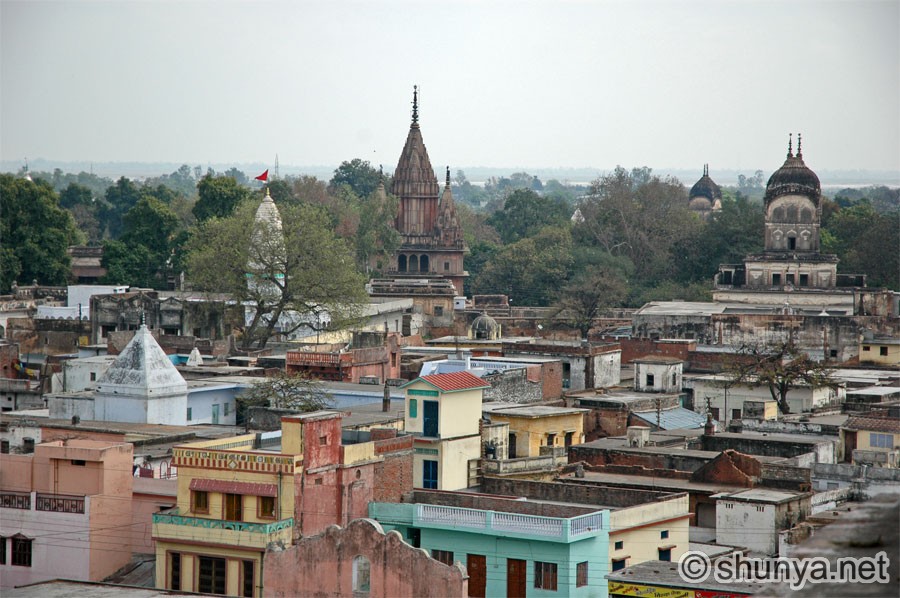
hanumantemple_ayodhya.jpgWith little over 10 sq Km in area, lying on the banks of the river Ghagra or Saryu, this ancient city is believed to be the birth place of Lord Rama, the seventh incarnation of Lord Vishnu. The holy book of Hindus- the Ramayana- says, the city was founded by Manu. Later, it became the capital of the descendants of the Surya dynasty. Lord Rama was the most celebrated King of this dynasty. Known as 'Kosaldesa' in ancient times, the place has been described as "a city built by gods and being as prosperous as paradise itself", in the Atharvaveda. From the time immemorial, this place has been noted for the performance of various rituals and Yajnas, including 'Asvamedha Yajna'. From the epic and puranic ages, Ayodhya rose to prominence again in the 6th century B.C,the times of Buddha. Situated just about 10 Km from the district headquarters of Faizabad, Ayodhya is a city of temples of several religions. Various faiths have grown and prospered simultaneously and that also in different periods of time in the history. Jain traditions, for example, consider that five Tirthankaras were born at Ayodhya including Rishabhadeva, the first Tirthankar. Don't miss the remnants of Buddhism, Hinduism, Islam and Jainism, that can still be found in Ayodhya.
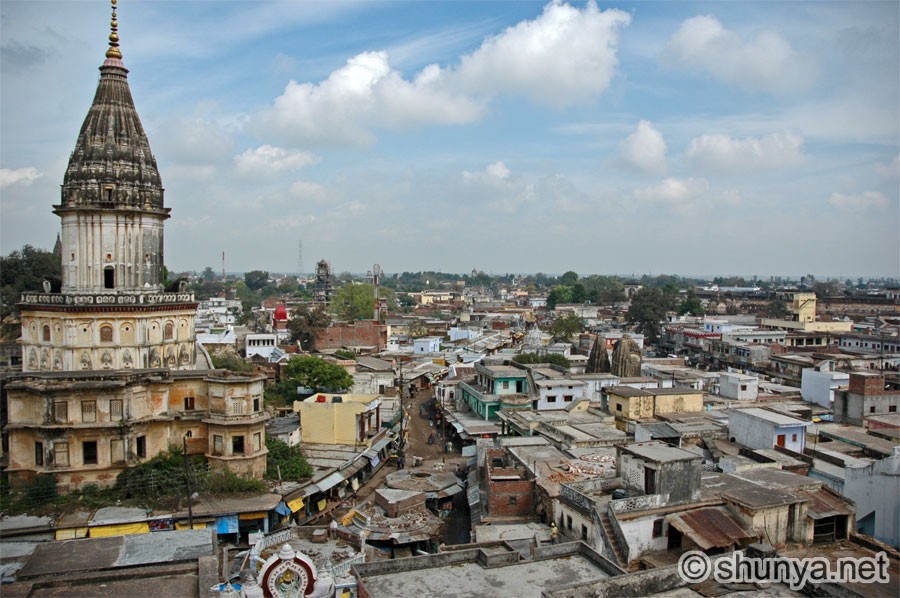
Skand and some other Puranas rank Ayodhya as one of the seven most sacred cities of India. It was the venue of many an event in Hindu mythology, today preeminently a temple town, The illustrious ruling dynasty of this region were the Ikshvakus of the solar clan (Suryavansa). According to tradition, Ikshvakus was the eldest son of Vaivasvata Manu, who established himself at Ayodhya. The earth is said to have derived its name `Prithivi’ from Prithu, the 6th king of the line. A few generations later came Mandhatri, in whose line the 31st king was Harischandra, known widely for his love of truth. Raja Sagar of the same clan performed the Asvamedha Yajna and his great grandson Bhagiratha is reputed to have brought Ganga on earth by virtue of his penance. Later in the time came the great Raghu, after whom the family came to be called as Raghuvamsa. His grandson was Raja Dasaratha, the illustrious father of Rama, with whom the glory of the Kausala dynasty reached its highest point. The story of this epic has been immortalized by Valmiki and immensely popularized by the great masses through centuries.

Ayodhya is preeminently a city of temples yet, all places of worship here, are not only of Hindu religion. At Ayodhya several religions have grown and prospered simultaneously and also at different periods of time in the past.

Places to visit

The Hanuman Garhi

Situated in the center of the town, this temple is approachable by a flight of 76 steps. Legend has it that Hanuman lived here in a cave and guarded the Janambhoomi or Ramkot. The main temple contains the statue of Maa Anjani, with Bal Hanuman seated on her lap. The faithful believe that all their wishes are granted with a visit to this holy shrine.

A massive structure in the shape of a four sided fort with circular bastions at each corner houses a temple of Hanuman and is the most popular shrine in Ayodhya.

Kanak Bhawan
This has images of Sri Rama and Sita wearing gold crowns. It is also known as Sone-ke-Ghar.

Ramkot
The chief place of worship in Ayodhya is the site of the ancient citadel of Ramkot which stands on an elevated ground in the western part of the city. Although visited by pilgrims throughout the year, this sacred place attracts devotees from all over India and abroad, on `Ram Navami’, the day of Lord’s birth, which is celebrated with great pomp and show, in the Hindu month of Chaitra (March-April).

Swarg Dwar
According to mythology, Lord Rama is said to have been cremated here.

Mani Parbat and Sugriv Parbat
The first of these ancient earth mounds is identified with a stupa built by the Emperor Ashoka, while the second is believed to be an ancient monastery.

Treta ke Thakur
This temple stands at the place where Rama is said to have performed the Ashvamedha Yajnya. About 300 years ago the Raja of kulu built a new temple here, which was improved by Ahalyabai Hokar of Indore during 1784, at the same time the adjoining Ghats were also built. The initial idols in black sandstone were recovered from Saryu and placed in the new temple, famous as Kaleram-ka-Mandir.

Nageshwarnath Temple
The temple of Nageshwarnath is said to have been established by Kush the son of Rama. Legend has it that Kush lost his armlet, while bathing in the Saryu, which was picked up by a Nag-Kanya, who fell in love with him. As she was a devotee of Shiva, Kush erected this temple for her. It is said that this has been the only temple to have survived till the time of Vikramaditya, the rest of city had fallen into ruins and was covered by dense forests. It was by means of this temple that Vikramaditya was able to locate Ayodhya and the sites of different shrines here. The festival of Shivratri is celebrated here with great pomp and splendor.

Other places of interest
Rishabhadeo Jain Temple, Brahma Kund, Amawan Temple, Tulsi Chaura, Laxman Quila, Angad Tila, Shri Rama Janaki Birla Temple, Tulsi Smarak Bhawan, Ram ki Paidi, Kaleramji ka Mandir, Datuvan Kund, Janki Mahal, Gurudwara Brahma Kund Ji, Ram Katha Museum, Valmiki Ramayan Bhawan, are among other places of interest in Ayodhya.

About the City

Area : 10.24 Sq. km.
Population : 40642 (1991 census)
Altitude : 26.90 meters above sea level.
Season : October – March.
Clothing (Summer) : Cottons
(Winters) : Woolens
Language : Hindi, Avadhi and English
Festivals : Shravan Jhoola Mela (July-August), Parikrama Mela (October-November), Ram Navmi (March-April), Rathyatra (June-July), Saryu Snan (October-November), Ram Vivah (November), Ramayan Mela.
Local Transport : Taxis/Tongas/Tempos/Buses/Cycle-Rikshaws.
STD Code : 05276

Accessibility

Air
For Ayodhya the nearest airports are Amausi Airport (Lucknow-134 km), Bumrauli Airport (Allahabad - 166 km)

Rail
Ayodhya is situated on the broad gauge Northern Railway line on Mughal Sarai – Lucknow main route. Ayodhya/Faizabad are connected to various parts of the country by the following trains:

2167/2168 – Saket Express (Bombay/Faizabad)
3307/3308 – Doon Express (Calcutta/Dehradun)
3151/3152 – Jammu Tawi Express (Calcutta)
3283/3284 – Ganga Yamuna Express (Bhiwani/Delhi-Varanasi/Danapur)
2449/2450 – Saryu Yamuna Express (Delhi/Varanasi)
9165/9166 – Sabarmati Express (Varanasi/Ahmedabad)

Road
Connected by road to several major cities and towns. Some of the major road distances are: Lucknow (134 km), Gorakhpur (132 km), Jhansi (441 km), Allahabad (166 km), Sravasti (109 km), Varanasi (209 km) and Gonda (51 km).

Accommodation

Kanan Bhawan Dharamshala. Phone: 32024.
Birla Dharamshala, Bus Station. Phone: 32252.
Gujrat Bhawan Dharamshala, near Bus Station. Phone: 32074.
Jain Dharamshala. Rai Ganj.
Janaki Mahal Trust Dharamshala, Naya Ghat.
Pandit Banshidhar Dharamshala, Naya Ghat.
Ram Charit Manas Trust Dharamshala.
Quality accommodation is available at Faizabad town, just 7 km away
Hotel Shane Awadh, Civil Lines, Faizabad. Phone: 23586.
Tirupati Hotel, Civil Lines, Faizabad. Phone: 2233/22448.
Hotel Alka Raje, Rekabganj, Faizabad. Phone: 22027.
Abha Hotel, Moti Bagh, Faizabad. Phone: 22930.

UP Tourism Accommodation

Pathik Niwas Saket, near Railway Station, Ayodhya. Phone: 32435.
(Run by U.P. State Tourism Development Corporation)

Ayodhya Land of Lord Sri Ram

Ayodhya (also Oudh or Awadh), an ancient city, is one of the seven sacred cities of the Hindus. In the Ramayana, Lord Rama was born here during the reign of his father, Dasaratha, in what was then a prosperous, well fortified city with a large population. In traditional history, it was the early capital of the kingdom of Kosala, while, in Buddha's time (6th-5th century BCE), Shravasti became the kingdom's chief city. Scholars equate Ayodhya with the city of Saketa, where the Buddha is said to have briefly lived. Its later importance as a Buddhist centre was attested by the Chinese Buddhist monk Fa-hsien in the 5th century CE who saw 100 monasteries here. Other monuments, including a stupa (shrine), were apparently built by Ashoka in the 3rd century BCE.
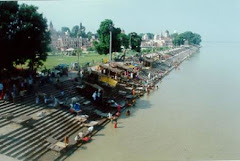
The Kanauj kingdom arose here in the 11-12th centuries. Later part of the Delhi sultanate, the Jaunpur kingdom, and the Mughal Empire, Oudh gained a degree of independence in early 18th century, before its subordination to the British East India Company in 1764 and annexation by the British in 1856; this and the subsequent loss of hereditary land revenue rights helped precipitate the Indian Mutiny of 1857. Despite the city's great age, few ancient monuments survive. Its temples and bathing ghats by the river Saryu are of no great age. Near the modern city are several mounds marking the site of ancient Ayodhya that have not yet been adequately explored by archaeologists.
Ayodhya's Babri Masjid was built in the early 16th century by the Mughal emperor Babur on a site believed to be Rama's birthplace and the location of an ancient Hindu temple, the Ram Janmabhoomi. Because of its significance to both Hindus and Muslims, the site was often a matter of contention. In 1990, riots in northern India followed the storming of the mosque by militant Hindus intent on erecting a temple on the site; the ensuing crisis brought down the Indian government. Two years later, on 6 Dec 1992, the three-story mosque was demolished in a few hours by a mob of Hindu fanatics. More than 1,000 people died in the rioting that swept through India following the mosque's destruction.
View from above
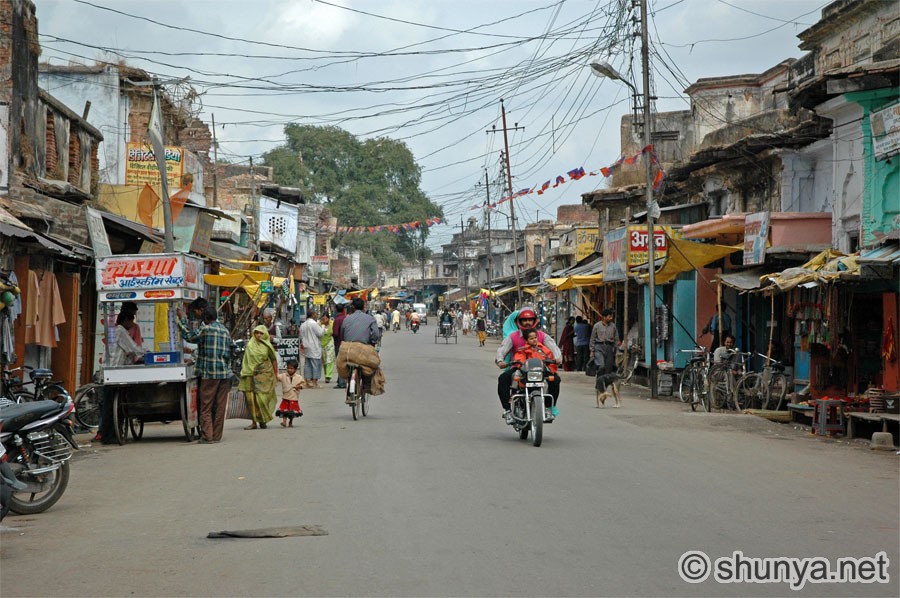
Main street
Main street
View from above

Mehndipur Balaji Daus Rajasthan India

Mehandipur Balaji
Click picture to ZOOM


Google Translate My Page
Gadgets powered by Google
Bookmark and Share

Sri Mehandipur Balaji Temple is situated in Dausa,Rajasthan.Basically Shri Mehendipur Balaji Temple is Lord Hanuman Ji's Temple.Long ago the image of Lord Balaji and that of Pret Raja (the King of spirits) appeared from the Arawali hills. Now people suffering from malignant spirits and black magic or spell get their relief when they make an appeal for relief to Shri Bhairav ji and Shri Pret Raj Sarkar who holds his court and awards punishment to the malignant spirits, ghosts, goblins, ghouls, evil eyed witches etc.Shrine of Balaji, Court of Pret Raja, Pooja griha, Bhairav ji temple and Ram Darbar are some of the spots worth seeing here.

Religious ritualistic performances, charity, feeding the poor, homeless and incapacitated people, water supply for all and fodder for cows and stray animals are the activities of this temple.

Balaji temple at Mehandipur in Rajasthan is very Powerful place. It is believed that the deity in this temple has divine power to cure a person possessed with evil spirit.Hundreds of 'Sankatwalas', as the possessed people are refereed to in local lingo, throng to the temple everyday to offer prayers and have 'darshan'. The temple has also become a home and the last respite for the victims.The 'Mahant' of the temple, Shri Kishor Puri Ji, prescribes the treatment. It can include reading holy texts, following a strict vegetarian and simple diet, and even afflicts physical pain to one's body.

One can witness people going through various physical therapies like keeping heavy stones on their body , on arms, legs and chest , to ease their pain. There are others who inhale the smoke that fumes out of the sweet Patasa's kept on smoldering cowpats. The ones with serious case of spirit possession, who tends to get violent, are even shackled in chains within the temple premises.

This may appear a bit anachronistic at the first glance, but thousands of people are believed to have been cured in this way. Festival time (Holi, Hanuman Jayanti and Dusshera etc) are regarded as the most auspicious time to emancipate from the evil spirit

Medical science may discard such approach to the ailment as self-deceptions based on blind faith, but for the believers, the power of Balaji is something supernatural, something beyond metaphysics.  


Places of Interest
Nilkanth Mahadev Temple - A large stone Linga, was also found whose top only is visible above the ground. It originally belonged to a Shiv Temple on the summit of the hill and a temple of Nilkanth Mahadev now occupies the site. The Temple is situated on the Aravali mountain range is at the centre of Dausa district. The temple is situated at the top of a hill. The temple is said to be 100-200 years old. Rajput kings used to have security arrangements adjacent to the temple. Cannons are still seen on the temple complex. Another interesting aspect linked to faith held by the devotees is the tiny stone structures bearing the semblance of houses at the sidewalks on the way to temple. These are built by pilgrims on their way to the shrine believing that this would fulfill their wishes of having a house of their own.
Mataji Ka Mandir - Another group of finely carved sculptures dating back to12th century AD that are worshipped are built in the front wall of a modern temple (built in 1965) known as Mataji ka Mandir etc. On the way to the Bawdi is the Harshd Mata Temple. It is dedicated to a goddess. It was built by King Chand or Chandra of Nikumbha Rajputs of Chahamana Dynasty who was ruling at Abaneri or ancient Abha-Nagari (City) during 8th - 9th century A.D. Facing East, this temple is raised over double terraced platform. Originally hails the super structure of the Mahameru Style. The Sanctum is Pancharatha on plan and consists of Sandhara Garbhagriha, pillared Mandapa, crowned by a domical ceiling. Each niche of the buttress of Garbagriha has beautiful Brahmanical deities. Sculptures curved in deep relief fixed in the niches around the plinth of the upper terrace are the main attraction of this temple.
Pratap Vatika - A few kilometres away from Dausa lay Vair. This is where the historic Pratap Vatika spreads itself. The once-lively fort-palace complex is now in ruins, and this makes an ideal location for a quiet picnic. The Pratap Mahal with its rounded roofs and small pillared balconies is very much in keeping with Rajput architecture. Within the complex is a small temple - Mohanji ka Mandir - made of red sandstone. Mohan is another name for Krishna, the dark and mischievous Hindu god with a flute. The arches and pillars of the temple, badly damaged, add to the romantic ambience greatly. The Lal Mahal topped by chhatris (cenotaphs) has a beautiful kund (tank) adjoining it. There are people inhabiting a part of the mahal, so the entire complex is not desolate. If not anything else, you might bump into their cows and goats at least.
Kaila Devi Temple - Kaila Devi(Goddess) Temple is situated on the banks of the Kalisil river in Karauli district. The temple is dedicated to the tutelary diety, goddess Kaila, of the erstwhile princely rulers of the Karauli state.It is a marble structure with a large courtyard of a checkered floor.In one place are a number of red flags planted by devotees.The place is also famous for its fair held during the dark half of 'chaitra'(March-April) and lasts for a fortnight.
Getting there and Around
By Air - The nearest airport is Sanganer, Jaipur (113 kms)
By Rail - The Nearest Railway station is Bandikui (40 kms)
By Road - Mehandipur Balaji is well connected to All major cities of North India .There is very frequent service of buses on Agra Jaipur highway. The journey can be performed by car from delhi either via Alwar-Mahwa or mathura-Bharatpur-mahwa.


Accomodation
Dausa has few good hotels of quality services like the Hotel Madhuban.There are many budget hotels too. There is a Dharamshala around the temple too that provides accommodation at very nominal charges.
Things to Remember

  • The disciples and Sankawalasare advised to contact Enquiry office for information required.

  • During the festive season & Mela please maintain discipline,wait patiently and coordinate with trust authorities.

  • Please Treat Sankatwalas humbly.

  • Bath, bear fresh clothes, be in queue & chant Jai shri Balaji-2 while for Darshan.

  • Leave the children at home/dharmshala/hotel as they may urinate etc in temple area and make place untidy. Lying/playing is not allowed in temple premises.

  • The people are not allowed to enter in girbh grigh area of temple. Offerings/prasadam should be handed over to pujariji.

  • For offerings 'sawamani', 'Bhandara', 'Bhramin Bhojan', 'Hawan', 'chola to Deity' , etc please contact Trust office in temple premises.

  • Disciples are intimated that entry in inhabited state or after smoking is totally banned.

  • Ladies, insane and evil spirited person must be accompanied by a attendant.

  • Spiritual water after arti of Lord shri Balaji shall be obtained with discipline and calm.

  • Taking photograph of deities and Sankatwalas is prohibited.

  • Insane and evil spirited person are cured by blessings of lord shri balaji.The attendant must take the help of representative of trust for cure/relief of sankat. The disciples are advised not to contact Sadhus,Sanyasies and fakirs etc for this purpose.

  • No trusty/self worker is supposed to take any favour from the devotees.

  • If any person faces harassment from any employee or self worker of trust.Please lodge a complain in office of sri balaji trust.

  • Beware of Pickpockets around the temple.As far as possible carry minimum cash and jewellery .Keep your precious belongings like Mobile phones, Gold jewellery at hotel room itself while going for Darshanas.

आरती बजरंगबली की

आरती बजरंगबली की
आरती कीजै हनुमान लला की । दुष्ट दलन रघुनाथ कला की ।।
जाके बल से गिरिवर कांपै । रोग-दोष जाके निकट न झांपै ।।
अंजनि पुत्र महा बलदाई । संतन के प्रभु सदा सहाई ।।
दे बीरा रघुनाथ पठाए । लंका जारि सिया सुधि लाये ।।
लंका सो कोट समुद्र सी खाई । जात पवनसुत बार न लाई ।।
लंका जारि असुर सब मारे । सियाराम जी के काज संवारे ।।
लक्ष्मण मूर्च्छित पड़े सकारे । लाय संजीवन प्राण उबारे ।।
पैठि पताल तोरि जमकारे । अहिरावण की भुजा उखारे ।।
बाईं भुजा असुर संहारे । दाईं भुजा संत जन तारे ।।
सुर नर मुनि आरती उतारें । जय जय जय हनुमान उचारें ।।
कंचन थार कपूर लौ छाई । आरति करत अंजना माई ।।
जो हनुमान जी की आरती गावे । बसि बैकुण्ठ परमपद पावे ।।
लंक विध्वंस किए रघुराई । तुलसिदास प्रभु कीरति गाई ।।

अथ बजरंग बाण

अथ बजरंग बाण
।। दोहा ।।

निश्चय प्रेम प्रतीत ते, विनय करें सनमान ।
तेहि के कारज सकल शुभ, सिद्घ करैं हनुमान ।।
जय हनुमन्त सन्त हितकारी । सुन लीजै प्रभु अरज हमारी ।।
जन के काज विलम्ब न कीजै । आतुर दौरि महा सुख दीजै ।।
जैसे कूदि सुन्धु वहि पारा । सुरसा बद पैठि विस्तारा ।।
आगे जाई लंकिनी रोका । मारेहु लात गई सुर लोका ।।
जाय विभीषण को सुख दीन्हा । सीता निरखि परम पद लीन्हा ।।
बाग उजारी सिन्धु महं बोरा । अति आतुर जमकातर तोरा ।।
अक्षय कुमार मारि संहारा । लूम लपेट लंक को जारा ।।
लाह समान लंक जरि गई । जय जय धुनि सुरपुर मे भई ।।
अब विलम्ब केहि कारण स्वामी । कृपा करहु उन अन्तर्यामी ।।
जय जय लक्ष्मण प्राण के दाता । आतुर होय दुख हरहु निपाता ।।
जै गिरिधर जै जै सुखसागर । सुर समूह समरथ भटनागर ।।
जय हनु हनु हनुमंत हठीले । बैरिहि मारु बज्र की कीले ।।
गदा बज्र लै बैरिहिं मारो । महाराज प्रभु दास उबारो ।।
ऊँ कार हुंकार महाप्रभु धावो । बज्र गदा हनु विलम्ब न लावो ।।
ऊँ हीं हीं हनुमन्त कपीसा । ऊँ हुं हुं हनु अरि उर शीशा ।।
सत्य होहु हरि शपथ पाय के । रामदूत धरु मारु जाय के ।।
जय जय जय हनुमन्त अगाधा । दुःख पावत जन केहि अपराधा ।।
पूजा जप तप नेम अचारा । नहिं जानत हौं दास तुम्हारा ।।
वन उपवन, मग गिरि गृह माहीं । तुम्हरे बल हम डरपत नाहीं ।।
पांय परों कर जोरि मनावौं । यहि अवसर अब केहि गोहरावौं ।।
जय अंजनि कुमार बलवन्ता । शंकर सुवन वीर हनुमन्ता ।।
बदन कराल काल कुल घालक । राम सहाय सदा प्रति पालक ।।
भूत प्रेत पिशाच निशाचर । अग्नि बेताल काल मारी मर ।।
इन्हें मारु तोहिं शपथ राम की । राखु नाथ मरजाद नाम की ।।
जनकसुता हरि दास कहावौ । ताकी शपथ विलम्ब न लावो ।।
जय जय जय धुनि होत अकाशा । सुमिरत होत दुसह दुःख नाशा ।।
चरण शरण कर जोरि मनावौ । यहि अवसर अब केहि गौहरावौं ।।
उठु उठु उठु चलु राम दुहाई । पांय परों कर जोरि मनाई ।।
ऊं चं चं चं चपल चलंता । ऊँ हनु हनु हनु हनु हनुमन्ता ।।
ऊँ हं हं हांक देत कपि चंचल । ऊँ सं सं सहमि पराने खल दल ।।
अपने जन को तुरत उबारो । सुमिरत होय आनन्द हमारो ।।
यह बजरंग बाण जेहि मारै । ताहि कहो फिर कौन उबारै ।।
पाठ करै बजरंग बाण की । हनुमत रक्षा करैं प्राम की ।।
यह बजरंग बाण जो जापै । ताते भूत प्रेत सब कांपै ।।
धूप देय अरु जपै हमेशा । ताके तन नहिं रहै कलेशा ।।
।। दोहा ।।
प्रेम प्रतीतहि कपि भजै, सदा धरैं उर ध्यान ।
तेहि के कारज सकल शुभ, सिद्घ करैं हनुमान ।।


संकटमोचन हनुमानाष्टक

संकटमोचन हनुमानाष्टक
।। मत्तगयन्द छन्द ।।

बाल समय रवि भक्ष लियो तब, तीनहुं लोक भयो अँधियारो ।
ताहि सों त्रास भयो जग को, यह संकट काहु सों जात न टारो ।।
देवन आनि करी विनती तब, छांड़ि दियो रवि कष्ट निहारो ।
को नहिं जानत है जग में कपि, संकटमोचन नाम तिहारो ।। 1 ।।
बालि की त्रास कपीस बसै गिरि, जात महाप्रभु पंथ निहारो ।।
चौंकि महामुनि शाप दियो तब, चाहिये कौन विचार विचारो ।
कै द्घिज रुप लिवाय महाप्रभु, सो तुम दास के शोक निवारो ।। 2 ।।
अंगद के संग लेन गए सिय, खोज कपीस यह बैन उचारो ।
जीवत न बचिहों हम सों जु, बिना सुधि लाए इहां पगु धारो ।
हेरि थके तट सिंधु सबै तब, लाय सिया सुधि प्राण उबारो ।। 3 ।।

रावण त्रास दई सिय को तब, राक्षसि सों कहि सोक निवारो ।
ताहि समय हनुमान महाप्रभु, जाय महा रजनीचर मारो ।
चाहत सीय अशोक सों आगि सु, दे प्रभु मुद्रिका सोक निवारो ।। 4 ।।
बाण लग्यो उर लक्ष्मण के तब, प्राण तजे सुत रावण मारो ।
लै गृह वैघ सुषेन समेत, तबै गिरि द्रोण सु-बीर उपारो ।
आनि संजीवनी हाथ दई तब, लक्ष्मण के तुम प्राण उबारो ।। 5 ।।
रावण युद्घ अजान कियो तब, नाग की फांस सबै सिरडारो ।
श्री रघुनाथ समेत सबै दल, मोह भयो यह संकट भारो ।
आनि खगेस तबै हनुमान जु, बन्धन काटि सुत्रास निवारो ।। 6 ।।
बन्धु समेत जबै अहिरावण, लै रघुनाथ पाताल सिधारो ।
देवहिं पूजि भली विधि सों बलि, देउ सबै मिलि मंत्र विचारो ।
जाय सहाय भयो तबही, अहिरावण सैन्य समैत संहारो ।। 7 ।।
काज किये बड़ देवन के तुम, वीर महाप्रभु देखि विचारो ।
कौन सो संकट मोर गरीब को, जो तुमसो नहिं जात है टारो ।
बेगि हरौ हनुमान महाप्रभु, जो कछु संकट होय हमारो ।। 8 ।।

।। दोहा ।।
लाल देह लाली लसे, अरु धरि लाल लंगूर ।
बज्र देह दानव दलन, जय जय जय कपि सूर ।।

श्री हनुमान चालीसा

श्री हनुमान चालीसा
श्री गुरु चरण सरोज रज, निज मन मुकुर सुधारि ।
बरनउं रघुबर विमल जसु, जो दायकु पल चारि ।।
बुद्घिहीन तनु जानिकै, सुमिरौं पवन-कुमार ।
बल बुद्घि विघा देहु मोहि, हरहु कलेश विकार ।।


जय हनुमान ज्ञान गुण सागर । जय कपीस तिहुं लोग उजागर ।।
रामदूत अतुलित बल धामा । अंजनि पुत्र पवनसुत नामा ।।
महावीर विक्रम बजरंगी । कुमति निवार सुमति के संगी ।।
कंचन बरन विराज सुवेसा । कानन कुण्डल कुंचित केसा ।।
हाथ वज्र औ ध्वजा विराजै । कांधे मूंज जनेऊ साजै ।।
शंकर सुवन केसरी नन्दन । तेज प्रताप महा जगवन्दन ।।
विघावान गुणी अति चातुर । राम काज करिबे को आतुर ।।
प्रभु चरित्र सुनिबे को रसिया । राम लखन सीता मन बसिया ।।
सूक्ष्म रुप धरि सियहिं दिखावा । विकट रुप धरि लंक जरावा ।।
भीम रुप धरि असुर संहारे । रामचन्द्रजी के काज संवारे ।।
लाय संजीवन लखन जियाये । श्री रघुवीर हरषि उर लाये ।।
रघुपति कीन्हीं बहुत बड़ाई । तुम मम प्रिय भरतहि सम भाई ।।
सहस बदन तुम्हरो यश गावै । अस कहि श्री पति कंठ लगावै ।।
सनकादिक ब्रहादि मुनीसा । नारद सारद सहित अहीसा ।।
यह कुबेर दिकपाल जहां ते । कवि कोबिद कहि सके कहां ते ।।
तुम उपकार सुग्रीवहिं कीन्हा । राम मिलाय राजपद दीन्हा ।।
तुम्हरो मन्त्र विभीषन माना । लंकेश्वर भये सब जग जाना ।।
जुग सहस्त्र योजन पर भानू । लाल्यो ताहि मधुर फल जानू ।।
प्रभु मुद्रिका मेलि मुख माही । जलधि लांघि गए अचरज नाहीं ।।
दुर्गम काज जगत के जेते । सुगम अनुग्रह तुम्हरे तेते ।।
राम दुआरे तुम रखवारे । होत न आज्ञा बिनु पैसारे ।।
सब सुख लहै तुम्हारी सरना । तुम रक्षक काहू को डरना ।।
आपन तेज सम्हारो आपै । तीनों लोक हांक ते कांपै ।।
भूत पिशाच निकट नहिं आवै । महाबीर जब नाम सुनावै ।।
नासै रोग हरै सब पीरा । जपत निरन्तर हनुमत बीरा ।।
संकट ते हनुमान छुड़ावै । मन क्रम वचन ध्यान जो लावै ।।
सब पर राम तपस्वी राजा । तिनके काज सकल तुम साजा ।।
और मनोरथ जो कोई लावै । सोइ अमित जीवन फल पावै ।।
चारों जुग परताप तुम्हारा । है परसिद्घ जगत उजियारा ।।
साधु सन्त के तुम रखवारे । असुर निकन्दन राम दुलारे ।।
अष्ट सिद्घि नवनिधि के दाता । अस वर दीन जानकी माता ।।
राम रसायन तुम्हरे पासा । सदा रहो रघुपति के दासा ।।
तुम्हरे भजन राम को पावै । जनम जनम के दुख बिसरावै ।।
अन्तकाल रघुबर पुर जाई । जहाँ जन्म हरि-भक्त कहाई ।।
और देवता चित्त न धरई । हनुमत सेई सर्व सुख करई ।।
संकट कटै मिटै सब पीरा । जो सुमिरै हनुमत बलबीरा ।।
जय जय जय हनुमान गुसांई । कृपा करहु गुरुदेव की नाई ।।
जो शत बार पाठ कर सोई । छूटहिं बंदि महासुख होई ।।
जो यह पढ़ै हनुमान चालीसा । होय सिद्घि साखी गौरीसा ।।
तुलसीदास सदा हरि चेरा । कीजै नाथ हृदय महं डेरा ।।


।। दोहा ।।
पवनतनय संकट हरन, मंगल मूरति रुप ।
राम लखन सीता सहित, हृदय बसहु सुर भूप ।।